Stop Chasing the Wrong Leads: How AI and Verified B2B Data Can Find Your Next Best Customers
Stop wasting time on leads that were never likely to convert. This blog explores how AI-powered prospecting and verified B2B data can help sales teams identify their ideal customers, prioritise high-potential accounts, and connect with the right decision-makers. Discover how combining accurate contact data, intelligent lead scoring, buying signals, and AI-driven recommendations can create a more focused sales pipeline—helping teams spend less time searching and more time engaging prospects with genuine potential to become customers.

Stop Chasing the Wrong Leads: How AI and Verified B2B Data Can Find Your Next Best Customers
Every sales team knows the frustration of spending hours researching prospects, writing outreach, making calls, and following up—only to discover that the contact has left the company, has no influence over the purchase, or was never a good fit in the first place.
“Combine verified business information with AI to identify the right buyers, engage them at the right time, and turn smarter targeting into stronger pipeline growth.”
This is one of the biggest hidden costs in B2B sales. It is not always a lack of effort that creates an underperforming pipeline. Often, it is effort directed at the wrong people.
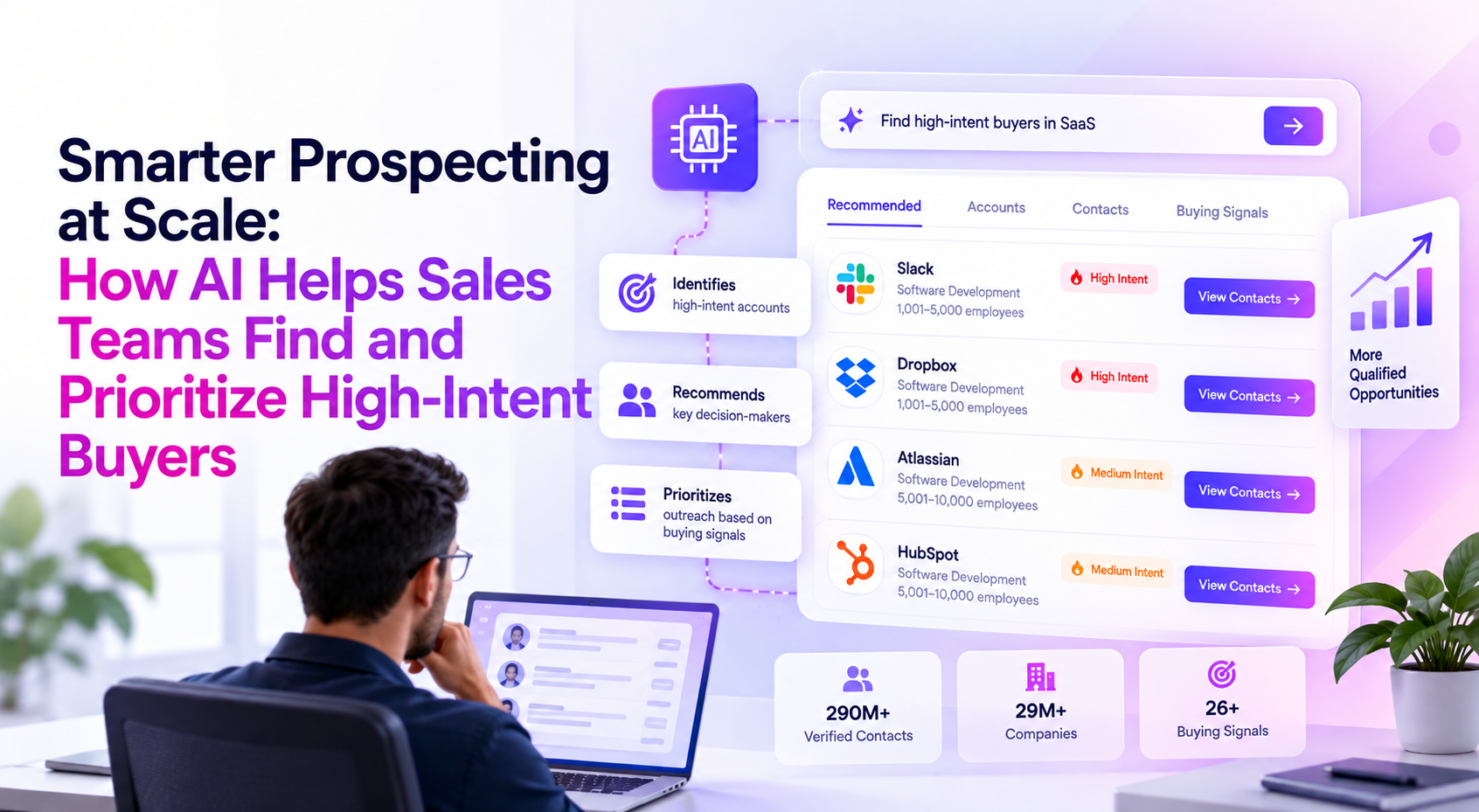
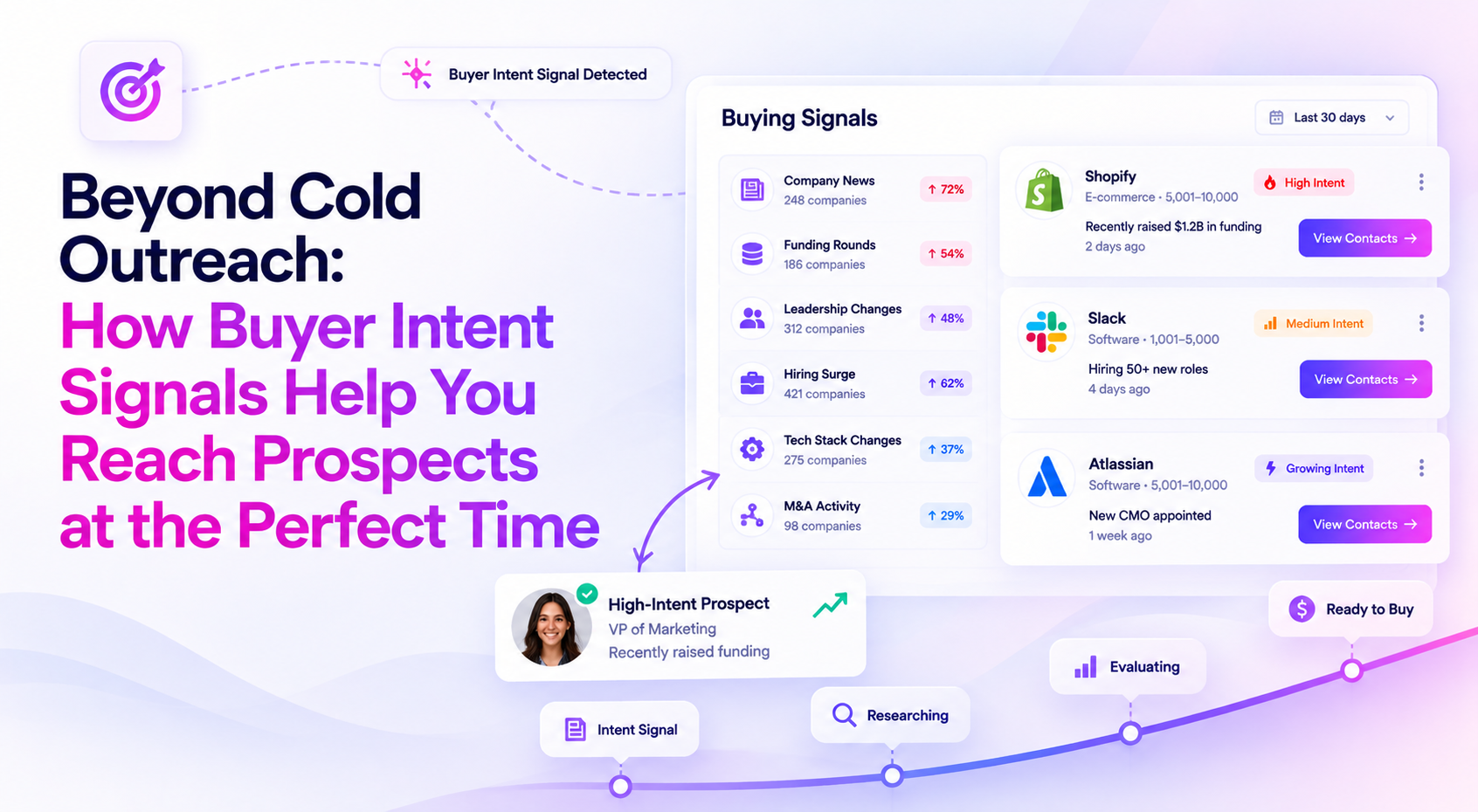
The answer is not simply to buy bigger lists or send more messages. High-performing sales teams are moving away from volume-led prospecting and towards a more intelligent approach: combining verified business information with AI-powered prioritisation. This helps them identify the accounts that fit their ideal customer profile, find the right decision-makers, detect signs of interest, and focus outreach where it has the best chance of converting.
When accurate information and AI work together, sales teams can stop chasing dead ends and spend more time building conversations with their next best customers.
The Cost of Chasing the Wrong Leads
Many sales teams still rely on static lists, incomplete CRM records, and manual research. A representative may start the day with a long list of names but little confidence in whether the contacts are current, relevant, or ready to buy.
That creates several problems.
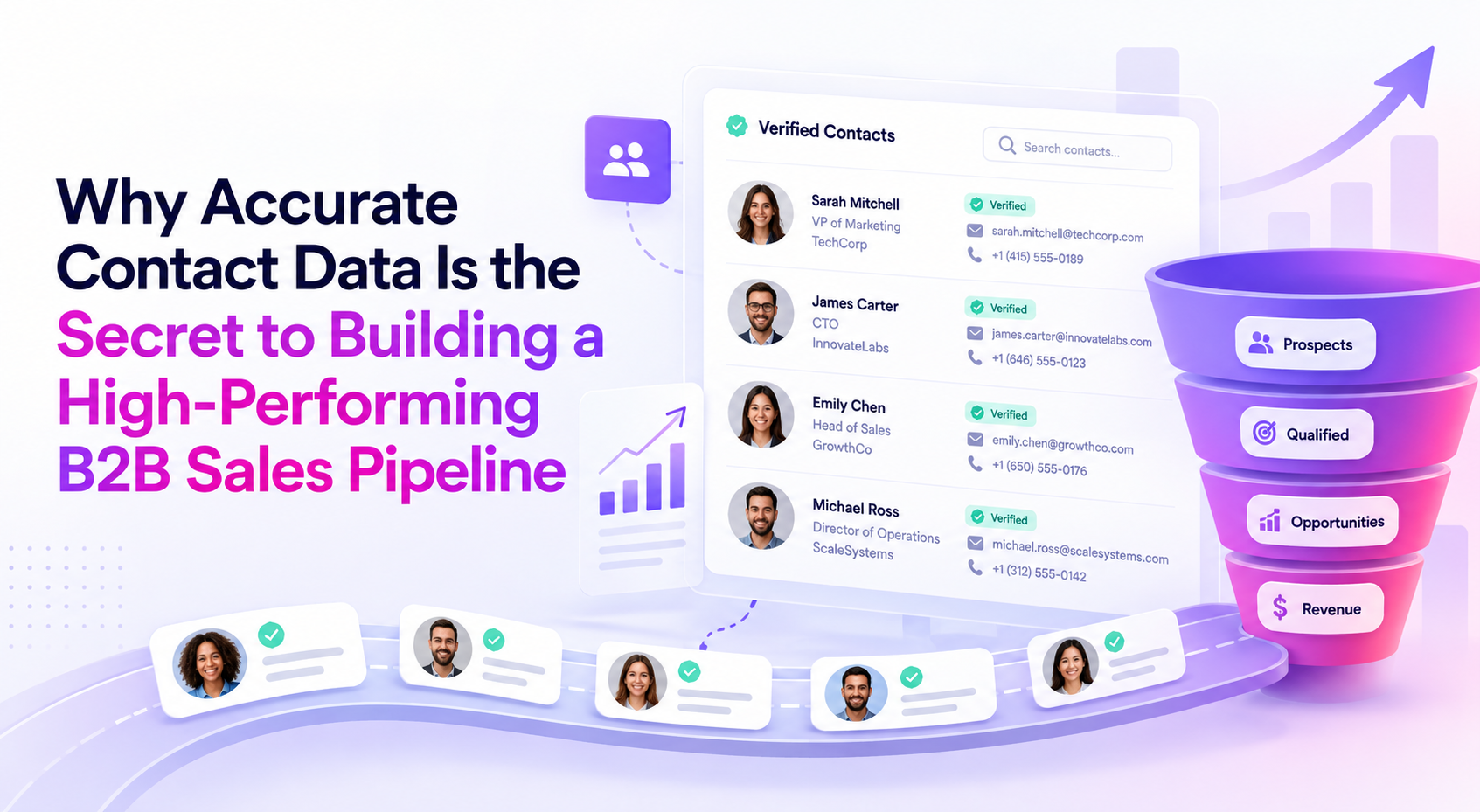
First, outdated details lead to wasted activity. A message sent to a former employee, an incorrect phone number, or an obsolete company address does not just fail to generate a response. It takes time away from a more valuable opportunity. It can also create high bounce rates, damage sender reputation, and make campaign reporting unreliable.
Second, poor targeting creates weak conversations. A sales representative might reach a person with the right title but the wrong level of responsibility, department, geography, or buying influence. They may spend time trying to create interest in a company that does not have the budget, business need, or profile to become a successful customer.
Third, inaccurate records make it harder to measure performance. If the CRM contains duplicates, missing fields, outdated job titles, or inconsistent company information, leaders cannot clearly see which segments are producing pipeline. Sales and marketing may make decisions based on activity metrics rather than genuine opportunity quality.
Data quality becomes even more important when AI is involved. If incorrect, incomplete, or duplicated records are fed into automated lead-scoring models and outreach workflows, mistakes can be repeated at scale. Poor information does not become useful simply because it is processed by AI—it can create a faster route to the wrong prospects.
The goal is not to give sales teams more leads. It is to give them better reasons to contact the right leads.
Final Thoughts
Sales success is not about chasing every company that could possibly buy. It is about identifying the businesses most likely to benefit from your solution, understanding when they are ready to engage, and giving your team the information needed to start meaningful conversations.
Verified business information ensures that sales teams are reaching real, relevant decision-makers. AI helps them analyse fit, intent, and timing at a scale no individual representative could manage alone.
Together, they create a smarter approach to prospecting: fewer dead ends, less wasted activity, better-quality conversations, and a pipeline built around your next best customers.
Sign up for our newsletter
Stay up to date with our team and get exclusive discounts.